

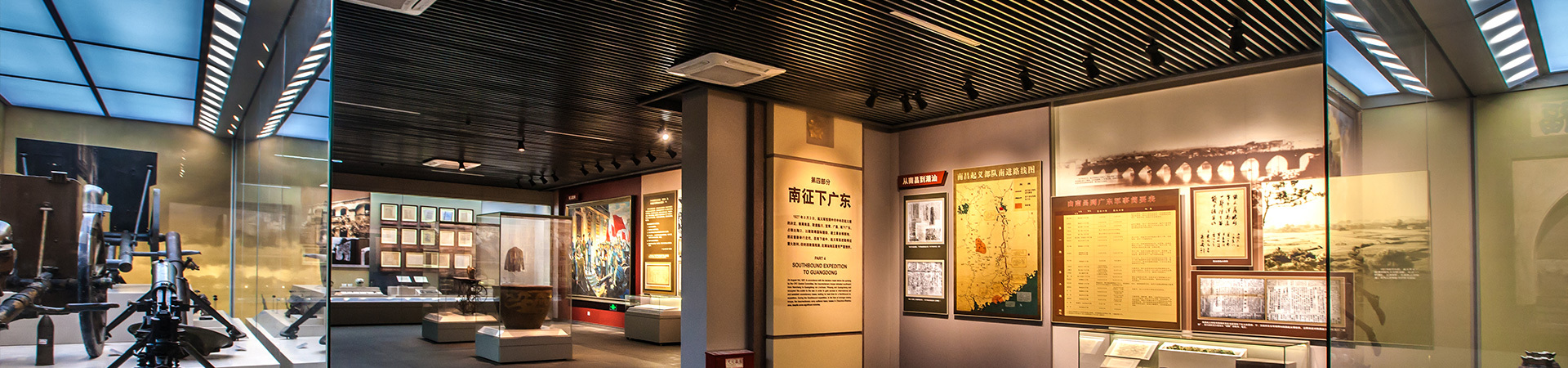
"Great Contributions - China and the World Anti-Fascist War" Exhibition
Release time:
2015-08-01
Name:"Great Contributions - China and the World Anti-Fascist War" Exhibition
Introduction:
On the occasion of the 70th anniversary of the victory of the Chinese People's War of Resistance Against Japanese Aggression and the World Anti-Fascist War, the Nanchang August 1 Uprising Memorial Museum will introduce the large-scale exhibition "Great Contributions - China and the World Anti-Fascist War" from the Memorial Museum of the Chinese People's War of Resistance Against Japanese Aggression, coinciding with the 88th anniversary of the founding of the People's Liberation Army. This is the third exhibition in our museum's series on the War of Resistance this year.
The gunfire at the Lugou Bridge on July 7 marked the beginning of the Chinese nation's anti-fascist war. The Kuomintang and the Communist Party of China ceased hostilities, set aside disputes, united against the common enemy, and made tremendous contributions to the great cause of national, ethnic, and world peace. The exhibition "Great Contributions - China and the World Anti-Fascist War" showcases nearly 200 precious historical photographs, comprehensively demonstrating the indelible contributions made by the Chinese people to the victory of the world anti-fascist war. The exhibition is divided into five main parts:
Part One: China was the first to open the curtain on the world anti-fascist war. On July 7, 1937, Japanese militarists brazenly launched a full-scale invasion of China. Under the leadership of the anti-Japanese national united front advocated by the Communist Party of China, based on Kuomintang-Communist cooperation, the Chinese people united as one to open the world's first large-scale anti-fascist battlefield.
Part Two: China's resistance against fascism disrupted the plans for the division of the world. The Axis powers of Germany, Japan, and Italy sought world domination and further strengthened their close cooperation. The prolonged resistance on the Chinese battlefield constrained the main forces of the Japanese army, ensuring the implementation of the anti-fascist allies' strategy of "first Europe, then Asia."
Part Three: China provided important strategic support to the Allies. China sent 100,000 expeditionary troops to fight in Burma, becoming an important strategic pillar for the Allies' anti-fascist war in the Asia-Pacific region, and the Chinese battlefield also became an important base for the Allies' counteroffensive against Japan.
Part Four: China promoted the establishment of an anti-fascist united front and participated in the founding of the United Nations. China actively advocated the establishment of an international anti-fascist united front, signing the "Declaration by United Nations" with the Soviet Union, the United States, the United Kingdom, and 26 other countries, and initiated the United Nations Constitutional Conference with these three countries, becoming one of the permanent members of the United Nations Security Council.
Part Five: China insists on peaceful development to safeguard the achievements of the anti-fascist war victory. After the victory in World War II, the Allies prosecuted fascist war criminals. China carried out various forms of commemoration and remembrance, steadfastly followed the path of peaceful development, and resolutely maintained lasting peace for humanity.
The exhibition is located on the third floor of the former command post of the Nanchang August 1 Uprising Memorial Museum, and will be open to the public for free starting August 1, 2015, until September 30, 2015. We welcome the public to visit.
recommend News
Copyright 2021 Nanchang August 1st Uprising Memorial Hall All Rights Reserved |Bayi Pavilion WeiboWebsite construction:www.300.cn