

Promote the August 1st Spirit and Enhance Red Tourism in Jiangxi
Release time:
2018-08-16
(Nanchang August 1st Uprising Memorial Hall Chen Hongmo)
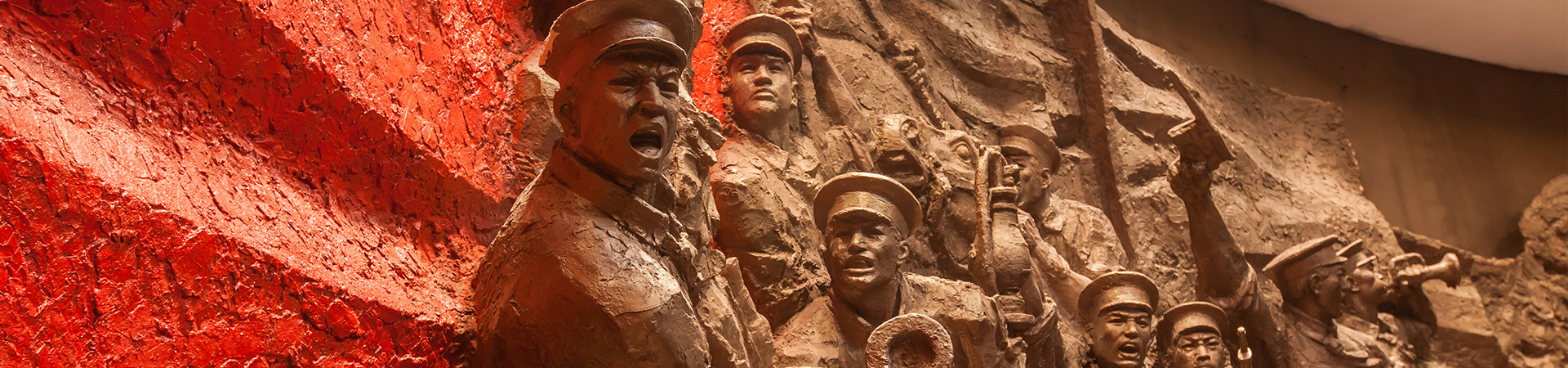
The August 1st Uprising that broke out in Nanchang in 1927 is a significant event in the history of the Chinese revolution. The uprising fired the first shot in the armed resistance against the reactionary Kuomintang, marking the beginning of the Chinese Communist Party's establishment of an army and the armed struggle to seize national power, thus entering a new historical period for the Chinese revolution. To this day, over 80 years have passed since the August 1st Uprising; although the smoke of the past has dissipated from the city of Nanchang, the uprising has left a valuable spiritual legacy for the sons and daughters of the heroic city that is worth inheriting and promoting.
So, what are the specific connotations of the August 1st spirit? In recent years, various sectors of society have engaged in academic discussions about the "August 1st spirit". Scholars have different interpretations of the August 1st spirit. For example, Xu Wei, a former director of the August 1st Museum, believes that the connotation of the "August 1st spirit" lies in: first, a firm revolutionary belief; second, daring to be the first; third, not fearing difficulties or sacrifices, being selfless and fearless; fourth, striving to learn, being innovative, working hard to improve, and continuously progressing. Another well-known party history expert, Yu Boliu, proposed "daring to be the first, obeying the party's command, being unyielding, and fighting for the people". In addition, there are other formulations. Although there are minor differences in the details of various scholars' expressions, there is a basic consensus on the major aspects, which is—"firm belief, unyielding spirit, courage to explore, and daring to be the first". In particular, the point of "daring to be the first" is universally recognized as the core of the August 1st spirit.
Promoting the August 1st spirit is not an empty phrase; it should have specific carriers and targets, and red tourism is an excellent way to promote the August 1st spirit. From another perspective, tourists who participate in red tourism generally have a good desire to receive revolutionary traditional education; therefore, promoting the August 1st spirit and promoting red tourism can undoubtedly form a positive interaction. Our current promotion of the August 1st spirit is closely related to the red tourism development advocated by governments at all levels. In the process of developing red tourism, relevant departments also need to carry forward the spirit of "daring to be the first", making pioneering efforts to attract more tourists to Jiangxi and provide first-class services to further enhance the influence and benefits of red tourism.
1. "Red tourism mainly refers to the thematic tourism activities organized to commemorate and learn about the revolutionary history, revolutionary deeds, and revolutionary spirit formed by the Chinese Communist Party leading the people during the revolutionary and construction periods, using the memorial sites and landmarks as carriers." It can be seen that red tourism carriers embody rich spiritual connotations. Red tourism not only needs historical events and deeds but also requires a certain spirit. What we refer to as promoting the August 1st Uprising and developing Jiangxi's red tourism industry at least contains two layers of meaning: first, we should carry forward the spirit of the martyrs of the August 1st Uprising who "dared to be the first", continuously liberating thoughts, updating concepts, fully utilizing Jiangxi's red resource advantages, and actively developing Jiangxi's red tourism industry; second, in the process of developing red tourism, we should utilize the sites and scenic areas of the August 1st Uprising to actively promote and introduce the August 1st Uprising and the August 1st spirit, attracting more tourists to join the ranks of red tourism. At the same time, we must further recognize that developing red tourism can effectively promote the construction of spiritual civilization, contribute to patriotic education and revolutionary traditional education, and also play an important role in promoting the healthy development of the economy in terms of material civilization.
Red tourism is a unique brand of China's tourism industry. When talking about red tourism, it is necessary to briefly review the development of the tourism industry in China over the past 30 years. The late 1970s in China was a period of rebuilding. The Third Plenary Session of the 11th Central Committee of the Communist Party of China held in 1979 abandoned the erroneous line of "taking class struggle as the key link" and sounded the clarion call for reform and opening up, marking the beginning of a new historical period in China. Since then, many emerging industries have developed rapidly, and the previously neglected tourism industry is one of them.
As a new industry in China's tertiary sector, the tourism industry has developed rapidly across the country since the reform and opening up due to its characteristics of low investment, quick returns, and the ability to accommodate a large workforce, and Jiangxi is no exception. In addition to its unique natural geographical conditions, Jiangxi's rich cultural and historical heritage also provides abundant resources for the development of the tourism industry.
Despite this, Jiangxi's tourism industry was relatively lagging in its early development compared to some provinces and cities with better foundations nationwide. At the same time, due to constraints from the hotel industry, catering industry, transportation, and other conditions, coupled with the overall economic difficulties in the early stages of reform and opening up, Jiangxi's tourism industry can be said to have had a difficult start. For a period of time, the image of Jiangxi people in people's minds still retained several stereotypes: the closed and backward "old-fashioned" image, the rule-abiding "honest person" image, the self-enclosed "small farmer" image, and the lack of belief "marginal person" image. Coupled with the profound influence of the traditional Gan culture of "gentlemen speak of righteousness, not profit", it is necessary to vigorously promote the "daring to be the first" spirit of the August 1st spirit to overcome inferiority complex and conventional thinking, stimulate confidence, liberate thoughts, and thus shape a new image of being pioneering, enterprising, daring to think and act, and being open-minded in the emerging field of red tourism to strive for a "latecomer advantage".
With the deepening of reform and opening up, the spirit of "daring to be the first" in the August 1st spirit has increasingly received attention in Jiangxi. Many leaders and scholars recognize that one of the important reasons for Jiangxi's lagging development is the conservative mindset. Inspired by the spirit of "daring to be the first", Jiangxi boldly thought and explored, and took the lead in proposing the slogan of "red tourism". According to relevant scholars' research, Jiangxi is the birthplace of "red tourism". This is a unique idea and pioneering practice proposed by the people of Jiangxi after updating their concepts and liberating their thoughts in the new situation to promote the development of the tourism industry. The brand and idea of "red tourism" were quickly accepted by relevant central departments and peers in the national tourism industry. In December 2004, the "General Office of the Central Committee and the General Office of the State Council specially issued the "2004-2010 Red Tourism Development Plan Outline", indicating that red tourism would be fully incorporated into the development of the tourism industry. With the transformation of red tourism from a concept proposed by scholars to an industrial policy vigorously promoted by the government, red tourism has developed healthily across the country, and Jiangxi's tourism industry has gradually emerged from its low point and is entering a better phase.
Appendix 1: Comparison Table of Several Indicators of Jiangxi's Tourism Industry in 2004 and 2009
Operating Income
(Ten thousand yuan) Profit
(Ten thousand yuan) Tax Revenue
(Ten thousand yuan) Profit Margin Number of Employees
(People) Number of Enterprises (Units)
2004 215164.97 -1811.39 6034.96 -0.84% 26830 621
2009 1347711.07 29359.01 70791.38 2.18% 73988 1161
Source: 2004 China Tourism Statistical Yearbook (copy) China Tourism Press October 2004 1st edition P48; 2009 China Tourism Statistical Yearbook (copy) China Tourism Press November 2009 1st edition P47
From the table above, it can be seen that in 2004, when the central government just proposed the outline for the development of red tourism, Jiangxi Province's tourism industry not only failed to make a profit but was even in a state of loss. Just five years later, in 2009, Jiangxi's tourism industry not only emerged from the shadow of losses but also created a profit of 290 million yuan, with tax revenue nearly 11 times that of five years ago. These five years coincided with the period of vigorous development of red tourism in the country and Jiangxi Province. The significant growth in the economic benefits of Jiangxi's tourism industry during this period owes much to red tourism, which is also closely related to the ideological shift of emancipating the mind and daring to be the first.
Second, red tourism is a thematic tourism activity based on revolutionary traditional education and patriotic education, relying on red resources. In addition to using media such as newspapers and television to promote the history of the August 1st Uprising and the spirit of August 1st, more emphasis should be placed on using specific red tourism carriers to educate and promote to a wide range of tourists. From a small item to a large battle site, each serves as an excellent teaching material for patriotic education and revolutionary traditional education. The spirit of August 1st embodies the Chinese Communist Party's arduous exploration of the revolutionary path, the pursuit of the lofty ideals of communism, and the pioneering spirit of "creating new situations in struggle." The connotation of the August 1st spirit is prominently expressed in the content carried by the carriers, making it an important material for educating tourists about revolutionary traditions and patriotism. Currently, in Nanchang City, in addition to the old site of the August 1st Uprising Command Headquarters (hereinafter referred to as the August 1st Museum), there are four other old sites of the August 1st Uprising. Among them, the He Long Command Headquarters, the Zhu De Officer Education Group, and the former residence of Zhu De are open to tourists for free all year round, while the Ye Ting Command Headquarters has not yet fully opened due to environmental restrictions (it is located within a middle school that conducts normal teaching every day). These old sites have long received a large number of visitors, especially after the free opening in January 2008, when the number of visitors surged. Without mentioning the August 1st Museum, which has the highest number of visitors, looking at the other old sites, the number of visitors to the He Long Command Headquarters after it opened for free in 2008 was 41,278, and in 2009 it was 46,912. The Zhu De Officer Education Group saw a rapid increase in visitors after it opened for free on January 30, 2008, reaching 270,000; in 2009, it reached 275,000. The former residence of Zhu De is relatively small and located in a more remote area, so the number of visitors is relatively low. After it opened for free on January 30, 2008, the number of visitors reached 26,000 that year; in 2009, it was 24,000.
The measures of free admission to red tourism sites such as museums and memorials have added fuel to the already warming red tourism, making red tourism in Nanchang City and Jiangxi Province even more popular. "In 2008, Jiangxi Province received 35.4317 million tourists for red tourism, accounting for 43.72% of the total number of tourists in the province; the comprehensive income from red tourism was 24.46 billion yuan, accounting for 43.73% of the province's total tourism income." Although the prominent "August 1st" brand has made a significant contribution to Jiangxi's red tourism, a deeper analysis reveals that there are still many areas that need improvement, one of which is how to increase the length of stay for tourists in Nanchang.
Before 2007, the August 1st Museum only had one building of the old site of the August 1st Uprising Command Headquarters for visitors to tour, and the average visit time for general tourists was 20-40 minutes. After the renovation and expansion project was completed in 2007, the area of the museum was expanded, and a new exhibition building was constructed to the south of the old site, moving the original "Basic Exhibition of the Nanchang Uprising" to the new exhibition building, equipped with multiple high-tech and high-level exhibition forms; the old site was restored to the setup of the Jiangxi Grand Hotel at that time. After visiting the new exhibition building, tourists follow the designed route to visit the old site of the Command Headquarters, making the total visit time generally around 1 hour. If tourists pay close attention during the visit, the time will exceed 2 hours. The extension of the visit time at tourist attractions can directly increase their stay time at the destination, thereby indirectly boosting local consumption. In fact, the number of visitors to the August 1st Museum has surged since it opened for free in January 2008. According to statistics, the number of visitors to the August 1st Museum reached 1.528 million in 2008. In 2009, the number of visitors was 2.035 million. For comparison, the total number of visitors in 2006 was 590,000 (the museum was closed for repairs in 2007 and was not open to the public for more than half a year, so it is not comparable). It is clear that the renovation and expansion project in 2007 has indirectly generated economic benefits and direct social benefits for promoting red tourism in Jiangxi Province.
As a national 4A-level tourist attraction located in the city center, the August 1st Museum is still relatively small in size. Moreover, from the perspective of protecting cultural relics and their surrounding environment, it is not only necessary but also legally justified to continue expanding the area of the August 1st Museum. This justification is based on the "Protection Plan for the Old Site of the August 1st Uprising" prepared by Southeast University, which has the highest qualifications in the country, commissioned by the August 1st Museum in 2005. According to the requirements of the State Administration of Cultural Heritage, after the "Protection Plan for the Old Site of the August 1st Uprising" was completed and reported step by step, the State Administration of Cultural Heritage issued a cultural relic protection letter [2006] No. 260 in March 2006, approving "in principle the reported plan." The Jiangxi Provincial Government issued a document [2007] No. 20 in April 2007, approving "in principle the plan." Thus, the plan was officially approved by the provincial people's government. The plan determines the protection range around the Command Headquarters, which extends north to Zhongshan Road, east to Jewelry Street, south to Cotton Lane, and west to Cuihua Street. If this plan is implemented, the Wanshou Palace Shopping Mall adjacent to the August 1st Museum should be relocated, and the vacated land within the cultural relic protection range can be used as an expanded area for the August 1st Museum for red tourism. We can imagine that once this plan is implemented, with the expansion of the area of the August 1st Museum, the time tourists spend visiting the museum will inevitably be further extended; moreover, tourists can not only visit but also enjoy leisure in the bustling garden. Of course, fully implementing this plan requires significant determination from higher authorities and relevant units, as well as considerable effort and funding. However, whether from the perspective of promoting red tourism or considering longer-term benefits, we believe it is necessary to expedite the full implementation of the "Protection Plan for the Old Site of the August 1st Uprising," as this will not only help protect cultural relics but also further promote red tourism, bringing enormous benefits.
In the first half of 2009, Nanchang City’s tourism revenue reached 3.93 billion yuan, with an increase of 3.15%. Among them, the "August 1st" brand played an indispensable role in the vigorous development of red tourism in Nanchang City, providing a striking highlight. However, from the perspective of the province's red tourism, the "August 1st" brand still has further potential to be explored.
"Perseverance" is an important component of the August 1st spirit. Many examples that fully embody this spirit occurred during the uprising army's march south to Guangdong. More than 20,000 soldiers and officers of the uprising army, in order to implement the strategy of "marching south to Guangdong" formulated by the Central Committee of the Communist Party of China before the uprising, marched long distances under the scorching sun, unafraid of sacrifice when encountering the enemy, and fought tenaciously. The uprising army left many revolutionary sites carrying the August 1st spirit in the counties and cities they passed through in Jiangxi. Unfortunately, some counties and cities do not fully recognize the importance of utilizing these August 1st revolutionary sites and developing red tourism, and their promotional efforts are also lacking. Here are a few examples.
Linchuan is an important city in central Jiangxi. Since the reform and opening up, this city has indeed done a lot of work in tourism promotion, including vigorously promoting Linchuan as the "hometown of talented people," the birthplace of Tang Xianzu and Wang Anshi, etc. While promoting famous historical figures is certainly a good way to enhance Linchuan's visibility, the city's red history should not be overlooked. After the August 1st Uprising, Linchuan was the first major transportation hub on the route south for the uprising army. The army stayed in Linchuan for five days, during which many important activities took place, receiving strong support from the Linchuan Communist Party organization and the people of Linchuan. For example, after learning about the August 1st Uprising, the Linchuan County Committee of the Communist Party of China "allocated forces to rush to Wenzhun to guide and assist the uprising army in crossing the border, set up tea stations and transport teams at markets along the route in Wenzhun, Li Du, etc., and organized a workers' patrol team in the city to strengthen defenses against sudden incidents. They mobilized workers, students, and women to form propaganda teams, transport teams, and tea stations, and prepared supplies." On August 7, the Linchuan County Committee of the Communist Party of China held a meeting for party members in the "Mei Yi Mei Hui," calling on everyone to join the army, and over four hundred people actively responded and joined the uprising army. Additionally, the 20th Army reorganized its troops in Linchuan, forming the Third Division and appointing Zhou Yiqun as the division commander, while adjusting the marching schedule and daily marching distance. Furthermore, when Comrade Chen Yi, who was responsible for the Central Military Academy in Wuhan, was still in Jiujiang during the uprising, he met with Zhou Enlai and Liu Bocheng in Linchuan and reported on the deployment of military academy students. These revolutionary historical facts are well-documented and fully reflect the "unyielding" spirit of August 1st, representing valuable red tourism resources that can be developed.
A similar situation exists in Huichang. Huichang is very close to Ruijin, but the influence and economic benefits of Huichang's red tourism are far inferior to those of Ruijin. There are certainly objective factors at play, as Ruijin can emphasize its characteristic as the "cradle of the Republic," but subjective factors cannot be completely ruled out, among which the lack of promotion and the failure to vigorously explore red tourism resources should be one of the reasons. Lanshan, on the outskirts of Huichang, is the battlefield where the August 1st Uprising army fought fiercely against the enemy. The battle in Huichang was the first major and fierce battle fought by the people's army after its establishment. This battle completely defeated the enemy's elite forces and shattered the enemy's conspiracy to attack the uprising army from the flank, fully demonstrating the uprising army's spirit of not fearing sacrifice and being unyielding, which boosted the morale of the uprising soldiers. However, we rarely see local government promotion of this battle. Geographically, Huichang is not far from Ruijin, and Ruijin's red tourism has recently been thriving. "In the first four months of this year, the average booking rate for hotel rooms in the city reached 65%, receiving 500,000 tourists, and the income from the red tourism industry reached over 67 million yuan." If the relevant departments in Huichang promote effectively, implement strong measures, and find ways to attract some of the tourists coming to Ruijin to Huichang, extending the red tourism route from Ruijin, it will undoubtedly play a positive role in promoting the local economic and social development.
Conclusion
In recent years, with the prosperity of tourism, especially red tourism in China, governments at all levels have increasingly valued the exploration, construction, promotion, and protection of tourist attractions and scenic spots. Some local governments even spare no expense in creating certain attractions. Jiangxi, as a revolutionary old area, has rich red resources, among which the former site of the August 1st Uprising and the August 1st spirit are valuable legacies left to us by revolutionary predecessors. We must cherish these valuable assets, strictly protect revolutionary sites, and strive to promote the August 1st spirit, allowing them to play a better role in Jiangxi's red tourism industry, further enhancing social and economic benefits, and contributing to Jiangxi's economic development in the new century.
References:
[1] "The August 1st Spirit Inspires Us to Move Forward" Jiangxi Daily 2009-09-16
[2] Yu Boliu: "On the Connotation of the August 1st Spirit and the Forging of Military Soul" Jiangxi Social Sciences 2007 No. 8
[3] Zhou Zhengguo, Gao Haisheng, et al. "Basic Theoretical Research on Red Tourism" Social Sciences Academic Press, January 2008, 1st Edition P22
[4] Wan Zhenfan, ed. "Promoting the Spirit of Jinggangshan" Baihuazhou Publishing House, 2003 Edition, pages 134-135
[5] Yu Luo Rioux: GREEN WITH RED: ENVIRONMENT AND JIANGXI’S TOURISM DEVELOPMENT Asia Geographer 2006/25-P129.
[6] Zhou Zhengguo, Gao Haisheng, et al. "Basic Theoretical Research on Red Tourism" Social Sciences Academic Press, January 2008, 1st Edition P74
[7] Data source: Chen Hongmo's field investigation in March 2010
[8] "Jiangxi Joins Hands with Four Provinces to Create a Red Tourism Brand" Nanchang Evening News 2009-08-08/21
[9] "Nanchang's Tourism Revenue in the First Half of the Year Reached 3.93 Billion" Nanchang Evening News 2009-07-21/A3
[10] Fuzhou City Archives: "Fuzhou People Welcome the Uprising Army" Collection of Materials on Modern Chinese Revolutionary History "Nanchang Uprising Materials" People's Publishing House, July 1979, 1st Edition p322-324
[11] "Zhou Yiqun Report" Collection of Historical Materials of the Communist Party of China "Nanchang Uprising" Party History Publishing House, June 1987, 1st Edition, June 2009, Second Printing p115
[12] Chen Yi: "On the August 1st Nanchang Uprising" Collection of Historical Materials of the Communist Party of China "Nanchang Uprising" Party History Publishing House, June 1987, 1st Edition, June 2009, Second Printing p294
[13] "The Gold Content of Ruijin's Red Culture is Increasing" Jiangxi Daily 2010-06-06/2
Author Introduction: Chen Hongmo (1951-) Deputy Researcher of the Nanchang August 1st Uprising Memorial Hall
recommend News

Copyright 2021 Nanchang August 1st Uprising Memorial Hall All Rights Reserved |Bayi Pavilion WeiboWebsite construction:www.300.cn