

八一起义军总指挥部汕头大埔会馆
Release time:
2018-01-14
In the middle section of Minquan Road in Shantou, there is a Dapu Guild Hall, where the red flag of the August First Uprising Army (the Second Front Army of the National Revolutionary Army) once flew high on this building, fluttering in the wind.
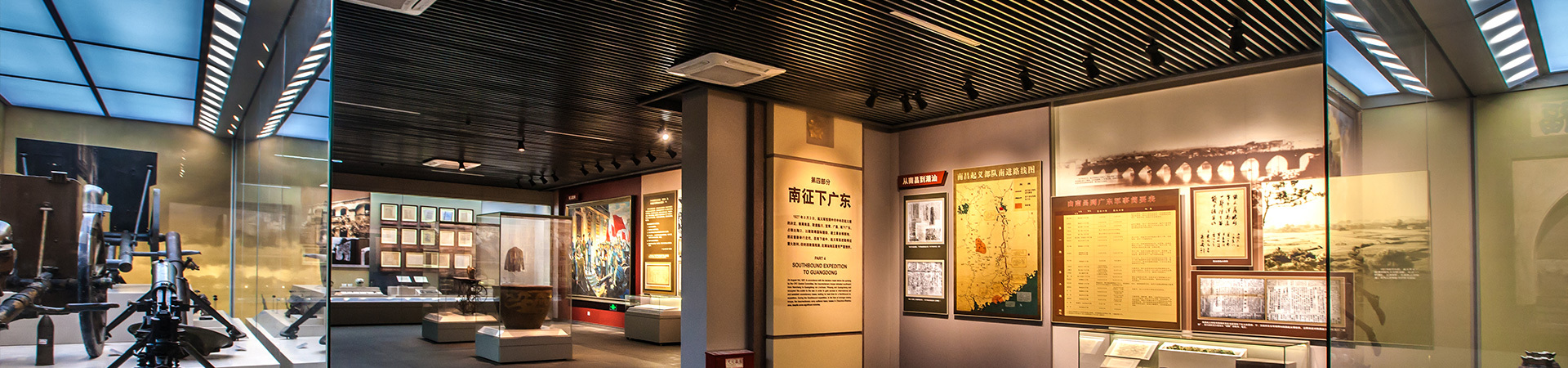
In 1927, in order to save the revolutionary crisis, under the leadership of comrades such as Zhou Enlai, Zhu De, Peng Pai, He Long, and Ye Ting, the Nanchang Uprising was launched. To seize the source of the Chinese revolution, accumulate strength, and prepare for the continuation of the Northern Expedition, the uprising army left Nanchang on August 5 and began the southern expedition to Guangdong.
Along the way, they fought hard in Jiangxi, Fujian, and other places, repelling countless enemy ambushes, and entered Guangdong from Fujian. As soon as the uprising army reached the Guangdong border, all the reactionaries in the Chaoshan area were in a panic and hurriedly evacuated.
However, the people of Chaoshan immediately took action to prepare to welcome their army. Workers, farmers, revolutionary youth, students, and women in Shantou City all prepared to welcome their soldiers, especially the workers in the city and farmers in the suburbs. On September 23, the farmers in the suburbs gathered in Gounan upon hearing that the uprising army would arrive in Chaoshan, and with the workers as internal support, they attacked Shantou City on the 24th after a night of work. At that time, the reactionaries of the Kuomintang retreated to the Feiying warship and quickly sailed to Mayu Kou to dock. On September 25, the uprising army entered Shantou. The workers organized to act as guides, translators, and formed stretcher teams to support their army, while people from all walks of life actively comforted the uprising army under the party's mobilization.
After the uprising army entered Shantou, the command center was set up at the Dapu Guild Hall, and revolutionary measures were immediately taken. A meeting of representatives from workers, farmers, soldiers, and various sectors was convened to establish a people's government, appointing Li Lisan as the director of the Public Security Bureau (actually replaced by Xu Guangying), and Guo Moruo as the customs supervisor and foreign affairs negotiator. They announced the abolition of the feudal system and the implementation of "land to the tiller." At the same time, the military command issued a notice to stabilize public sentiment and social order, and the political department of the revolutionary committee informed the people of the city to expose the Kuomintang's betrayal of the revolution, denouncing Chiang Kai-shek and Wang Jingwei, and successively suppressing some extremely heinous counter-revolutionaries to consolidate the revolutionary order. They also organized comfort teams to visit the families of martyrs.
On the 26th, the uprising army held a mass meeting in Niutudi. On that day, tens of thousands of workers and farmers entered the venue, shouting slogans such as "Down with imperialism!" "Down with the reactionaries!" "Avenge our sacrificed comrades!" Zhou Enlai, He Long, Ye Ting, and other comrades received a warm welcome when they met with the masses at the meeting. They spoke to the crowd. This day left an indelible glorious history in Niutudi.
In order to mobilize the masses and promote revolutionary ideas, the uprising army took over the "Lingdong Republic Daily," which had been transformed after being seized by the right-wing Kuomintang, and changed it to the "Revolutionary Daily," reporting the uprising army's firm continuation of anti-imperialist and anti-feudal revolutionary stance. However, due to the shift in military actions, the "Revolutionary Daily" was only published for three days before it ended.
The uprising army's occupation of Shantou greatly shocked imperialism. British and American imperialists sent warships into Shantou Port for demonstration and intimidation. Especially Japanese imperialism, which openly landed troops under the pretext of "protecting overseas Chinese," deployed marines to various foreign firms and consulates, attempting to create trouble.
On the afternoon of the 30th, the retreating Kuomintang reactionary army on the "Feiying" attempted to land at three locations: Shipaotai, in front of the customs, and at Jieyang Wharf, trying to counterattack and sneak attack the uprising army, aiming to retake Shantou. As a result, they were repelled by the uprising army and armed workers.
The "August First" uprising army, due to long-distance expeditions and hard battles, was isolated and unsupported, and under the siege of the Kuomintang's superior forces, suffered defeats in fierce battles with the enemy in Fen Shui Village in Jieyang (commonly referred to as the Battle of Tang Keng) on the 28th and 29th. On the 30th, Comrade He Long returned to Shantou from the front line and held a military meeting at the command center to arrange support for comrades retreating from Chaozhou, deciding to first retreat to the artillery positions in Jieyang and then maneuver towards Puning. Thus, they withdrew from Shantou on October 1. Here, it fell back into the white terror of the Kuomintang.
Although the "August First" uprising army stayed in Shantou for only seven days, it played an extremely significant role in the history of Shantou. To commemorate their soldiers and this glorious day, the people referred to these days as the "Seven Days of Red" in Chaoshan. The "August First" uprising army, led by the Communist Party of China, was the banner of revolutionary armed forces attacking counter-revolutionary armed forces. It sowed more revolutionary seeds in various places in Chaoshan, creating important conditions for armed struggles in areas such as Dannan Mountain, Sangpu Mountain, and Hailufeng, and inspired the people of Chaoshan to resolutely carry the revolution through to the end.
The command center of the "August First" uprising army when it entered Shantou—the Dapu Guild Hall—is now the First Primary School on Zhongma Road, where the party cultivates successors of the revolution. The people of Shantou cherish this glorious history of this magnificent building, which will inspire everyone who visits this revolutionary site to carry forward the glorious revolutionary tradition, emulate the strong will of the "August First" heroes, and strive to build our great motherland into a more beautiful place.
(Original document can be found in the Shantou City Archives, compiled: "Introduction to the Revolutionary Sites in Shantou City." Transcribed from the Nanchang "August First" Uprising Memorial Hall)
Next Page
recommend products


Copyright 2021 Nanchang August 1st Uprising Memorial Hall All Rights Reserved |Bayi Pavilion WeiboWebsite construction:www.300.cn