

Introduction to the Battle of Sanheba (Excerpt)
Release time:
2022-02-25
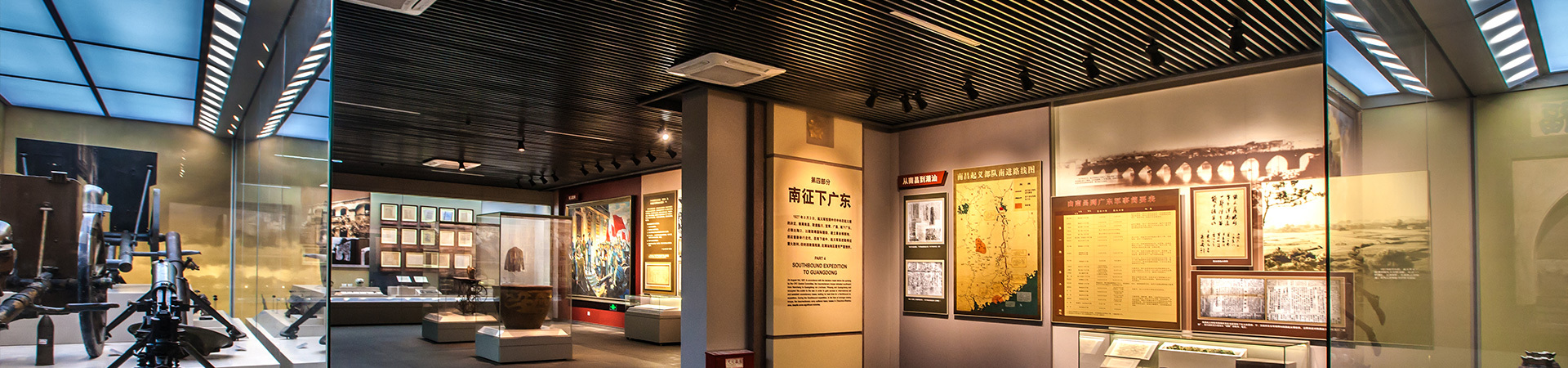
The Nanchang Uprising on August 1, 1927, was an armed uprising held in Nanchang, Jiangxi, under the leadership of comrades Zhou Enlai, Zhu De, He Long, Ye Ting, Liu Bocheng, and others. The participating troops included the officer education regiment led by Comrade Zhu De, the 20th Army led by Comrade He Long, and the 11th Army led by Comrade Ye Ting, totaling over 30,000 people, who successfully occupied Nanchang, the provincial capital of Jiangxi, marking the birth of the revolutionary armed forces led by the Communist Party of China. Starting from August 5, the armed forces of the uprising left Nanchang and headed south to seize Guangzhou, to rebuild the revolutionary base in Guangdong, and then to launch the Northern Expedition. After leaving Nanchang, the troops passed through Fuzhou, Ruijin, and Huichang, encountering the puppet army and the warlord Qian Dajun's and Huang Shaohong's troops, and fought a battle. After the Huichang battle, the uprising army moved from Changting to Shanghang, and then to Dapu towards Chaoshan.
In August and September 1927, when the uprising army moved south from Changting and Shanghang in Fujian to Chaoshan, the 25th Division led by Zhu De and Zhou Shidi stayed behind in Sanheba, Dapu County.
A month before the uprising army arrived at Sanheba, underground workers were sent to places like Jiangdong within the Sanheba area to secretly organize trade unions and farmers' associations.
On the afternoon of the 24th day of the eighth lunar month in 1927, more than ten soldiers from the advance troops of the Red Army crossed from Dongwenbu in Sanhe to Jiangcheng, followed by the main force marching from both banks of the Tingjiang River to Sanheba. The main force took over a hundred civilian boats and continued down the Hanjiang River. After a day and night of rapid marching, more than 2,000 people remained in Sanheba. At that time, merchants opened their doors and set off firecrackers to welcome them, conducting business all night, and the market was bustling. The uprising army wore hats with red edges, red scarves around their necks, blue clothes, tied their feet, and wore straw sandals, indistinguishable from the officers and soldiers. After arriving at Sanheba, the uprising army was accommodated in temples, ancestral halls, and the homes of the masses. The next day, notices were posted everywhere to assure the people, with the announcement attributed to Comrade Zhou Shidi. The army maintained good discipline, purchased goods fairly, spoke gently, and had a good relationship with the masses.
After staying in Sanheba for a few days, a mass meeting was held outside the south gate of Jiangcheng at Dashaba, attended by more than 2,000 people. It is said that Comrade Zhu De was the one who spoke while standing on a stool. After the meeting, a demonstration was held, with participants holding paper flags, shouting slogans, and posting banners. The marching crowd raised their arms and shouted: "Down with Christianity!", "Abolish the churches!", "Down with corrupt officials and local tyrants!", "Implement land to the tiller!", and other revolutionary slogans. The marching crowd entered through the east gate, exited through the south gate, then entered through the west gate and exited through the north gate before dispersing.
The uprising army stayed in Jiangcheng for about ten days and learned that the enemy army led by Qian Dajun was preparing to attack the uprising army from Songkou. To choose a favorable terrain, the uprising army moved the Dahao ship at night to transport the troops to Dongwenbu in Jiangdong, and all nearby boats on the west bank were moved to the east bank, leaving only a small boat as a ferry. Our army left three lookout posts on Gaoshan at Guanyin Pavilion. After the uprising army arrived at Dongwenbu, the command post was set up at the Tian family ancestral hall (the words "Swear to kill the enemy" are still on the wall inside, reportedly written by Comrade Zhu De), and the logistics department was set up at Sanxing Hall (the Longhukeng Ye family ancestral hall, which still has the words "Dingmao Year Seven Connected Three Rows"). They also chose a small hill about 80 meters opposite Jiangcheng—Bizhizui Mountain and Shizian area to dig trenches and build fortifications, which was a good position to block the enemy and control the Meijiang, Tingjiang, and Hanjiang rivers. Our main force concentrated here, with three water dragon machine guns on the front line, and trenches dug along the river at Dongwenbu and Zhutou. At that time, the front line was very long, stretching from Dama Lian Tang Meizi Dong to Chayin Zhi Keng, with our brave soldiers ambushed along the mountain tops, ready to launch a counterattack against the invading enemy.
Three days later, more than 10,000 troops from the Nationalist puppet army led by Qian Dajun arrived, with the vanguard first capturing "Shentan Peak". Our lookout on Gaoshan discovered the enemy and immediately retreated to "Sanbo Bridge", firing a warning shot, and then crossed the river by boat to regroup. After the puppet army occupied Jiangcheng, the command post was set up at Yuxing Hotel. When the bandits arrived, they immediately divided their troops to garrison Dama and dug trenches in the old fort and the area around the south gate, using broken walls and ruins for cover, with dozens of machine guns set up in the old fort, Yuxing Hotel, and Guanyin Pavilion, where a cannon was also set up, creating a standoff with our army, and the situation was very tense.
On that afternoon (the eighth day of the ninth lunar month), the battle broke out. Suddenly, gunfire erupted, and the bandit army's firepower was directed solely at our army's positions. Since our army was well-prepared, hidden among the dense pine trees, we held our ground like a copper wall and iron bastion, sometimes not firing a shot, and sometimes hitting targets with one or two shots. The enemy, unaware of our true strength, did not dare to charge, and we held out until nightfall. To create a false impression and exhaust the enemy's ammunition, our army used old oil barrels to set off explosions, making sounds like machine guns, causing the enemy to panic and fire aimlessly, leading to a restless night for them.
The next morning, the enemy captured more than ten civilian boats from the direction of Songkou, carrying troops to cross the river. The bandits disembarked at Huangyuanba and, under fire cover, launched several assaults. The first wave consisted of seven boats, and as the boats reached the center of the river, our three water dragon machine guns stationed on Bizhizui Mountain fired down from a high position, concentrating fire on the enemy boats. In an instant, water splashed everywhere, and the enemy boats became our live targets, sinking or damaged, with some boats left adrift. Seeing the imminent defeat, Qian Dajun, furious and ashamed, cursed loudly and called for ten more boats to launch a second assault, crawling towards our positions like turtles. Our army responded with fierce fire. The sounds of cannons, gunfire, and shouts of killing intertwined, and the bandits fell into the river one by one. At that time, a small leader, holding a flag, shouted from the side of a boat to charge! Our army fired a shot, sending him to the fish's belly. The damaged civilian boats carried corpses, drifting in the water. Two boats carrying remnants of the defeated troops landed at "Zou Gong Palace" (now Longhukeng Wharf), but were suppressed by our army's firepower and could not raise their heads. When the gunfire paused slightly, they dared to launch an assault, but our army's volley wiped out most of the enemy troops, and the remaining enemies were thrown into chaos and fled. The enemy on both sides opened fire to cover each other, leading to friendly fire, resulting in heavy casualties among the enemy, and the remaining defeated troops were all dealt with by our army.
Because our soldiers fought for the liberation of all of China, they received strong support from the masses, displaying bravery in battle, and the fighting lasted for three days and nights.
On the night of the third day, the enemy reinforced from two directions, one route from Gaopei and the other from Songkou. At dawn on the fourth day, thick fog enveloped the land, and the enemy attempted to cross from places like Dama Lianhuan, trying to cut off our army's route and encircle us. In the face of overwhelming enemy forces, our army adopted a strategy of full retreat, withdrawing the main force while still maintaining a fighting force of two thousand. Part of the troops moved to Guangdong, Haifeng, and Lufeng to join local rebel peasant armed forces, while another part, led by Comrade Zhu De, transferred through Jiangxi to northern Guangdong, then into southern Hunan, and finally engaged in battle at Jinggangshan, where they joined the First Division of the Workers' and Peasants' Revolutionary Army led by Comrade Mao Zedong, which later developed into the main force of the Red Army.
Although the uprising army stayed in the Sanheba area for a short time, the revolutionary actions had already taken root in people's hearts, expanding the party's influence in the countryside. Although the uprising army left, they sowed the seeds of revolution in the Sanhe area. Revolutionary martyrs Liao Jiazhen and Yang Nansheng (from the Jiangdong Brigade) developed into underground party members under the influence of this battle.
New Year's Day 1974
"Excerpt from the Nanchang 'August 1' Uprising Memorial Museum"
recommend products


Copyright 2021 Nanchang August 1st Uprising Memorial Hall All Rights Reserved |Bayi Pavilion WeiboWebsite construction:www.300.cn